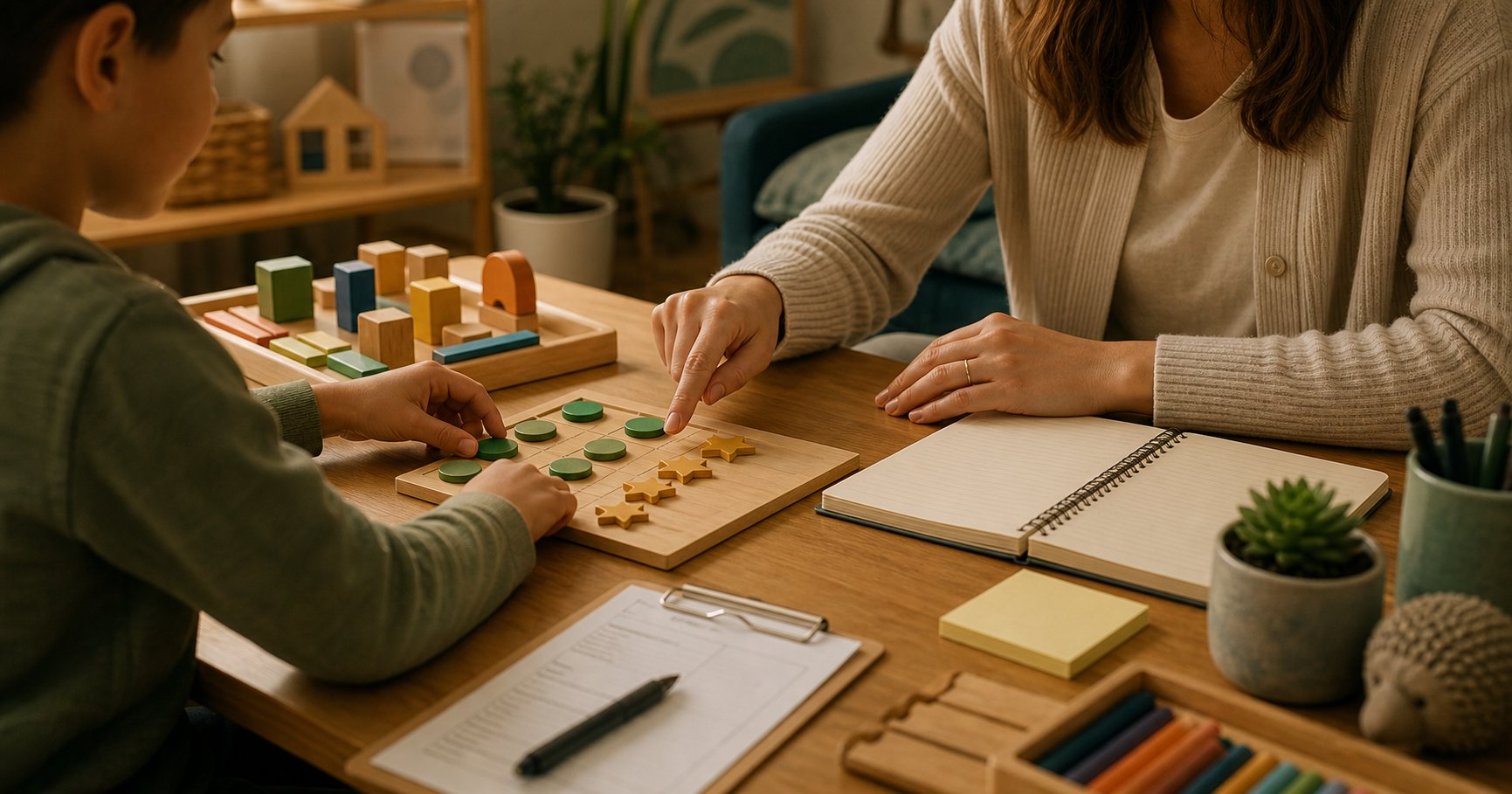
Most of us know the scene.
“You just need to finish this. It will be useful later,” we tell a child. We mean well. We can see something the child cannot yet see.
The task looks simple. It should take no more than ten minutes. Yet the child sits still, complains, or suddenly discovers ten other things that seem more urgent.
The adult sees a task that needs to be completed.
The child seems simply unwilling to make the effort.
But “the child cannot be bothered” only describes what we see. It does not explain why it is happening.
Perhaps the instructions are less clear than we think. Perhaps the child must hold too many steps in mind at once. Perhaps they have tried before and failed. Perhaps they fear making a mistake, being compared with others, or discovering once again that they do not measure up.
To the adult, it is one small assignment. To the child, it may look like an entire wall.
The pressure is happening now
Learning costs energy. A child must understand what to do, keep track of the process, and continue even when the answer does not come quickly.
Part of this is often described as cognitive load. Working memory is limited. When a child must keep too many steps active at once, more energy goes into holding the thread together and less capacity remains for learning.
The obstacle does not have to be cognitive alone. It may also be tied to the child’s emotional state, previous experiences, or the conditions surrounding the work. Any of these can make the next step feel heavier.
What looks like a lack of motivation may therefore be a perfectly understandable response to the situation as the child experiences it. Motivation is not a trait a child either possesses or lacks. It emerges from the interaction between the child, the task, and what happens when the child tries—or tries to escape the task.
By a motivational system, I do not mean only candy, points, or prizes. I mean everything that weighs for or against beginning and continuing. Research on interest and task choice points in the same direction: we are more willing to invest effort when we believe we can succeed, see value in the task, and experience the cost as manageable.
Imagine a scale. On one side is what the task costs the child now. On the other is what the child expects to gain by trying.
Behind the behavior may be three simple questions: Can I do this? Does this matter to me? Is it worth the effort right now?
Adults know this experience too. We may genuinely want to reach a goal and still postpone the first move when the route is unclear, the opening step feels too large, or the benefit is far away. The reward arrives later. The relief of postponing the task arrives immediately.
An adult usually has years of experience showing that small, tedious steps can lead to something worthwhile. A child is still building that connection. Yet we often speak as if a distant benefit should already carry as much weight in the child’s mind as what they feel here and now.
The future is far away
We tell children they need to do well in school so they can continue their education, find good work, and have more choices later in life.
All of that may be true.
Children can, of course, think about the future. But a distant and indistinct future does not automatically motivate action today. It must compete with what the child feels immediately: the relief of avoiding a difficult task, the friends waiting nearby, or the entertainment available now.
For a six-year-old, a treat after dinner, a friend waiting outside, or a game that can begin immediately is clear and close. The child knows what is available and how soon it will arrive. “This will help you when you grow up” does not carry the same force.
Looking further ahead generally becomes easier with age and experience. In a large study of 935 people between the ages of 10 and 30, younger adolescents generally did not look as far into the future as participants aged 16 and older. Differences between age groups in planning ahead were also visible into early adulthood.
We should not be surprised, then, when the promise of a good life ten or twenty years from now has little motivational power over a difficult assignment on a Tuesday morning.
The pressure is here. The benefit the adult is pointing toward is somewhere far away.
We need to bring purpose closer
The answer is not to make all learning entertaining. Some tasks will be difficult. Children need to learn how to do things that do not particularly interest them and how to continue when they want to stop.
But that is precisely a skill we need to teach, not merely demand. It grows when a child practices taking one manageable step and can see that the effort produces something.
Sometimes we therefore need to make the value of learning visible now. We make the purpose understandable, the next step realistic, and the progress visible.
Research illustrates this as well. In one American experiment, 262 ninth- and tenth-grade students were randomly assigned to two groups. One group regularly wrote about how material from science class connected to their own lives. The other wrote summaries of the same material.
Among students who had low expectations of succeeding in the subject, interest increased when they connected the material with their own lives. At the school where grade data were available, students in this group also earned higher grades. In this experiment, a personal connection to the material affected both interest and achievement.
One study cannot explain all motivation. It does show something important: purpose is not decoration that we add to learning afterward.
The reason to continue does not always need to be grand. Sometimes it is enough for the child to understand why the task matters, see their own progress, or have a meaningful choice in how to work toward the same goal.
Candy, points, and prizes all make the benefit clear and close. External rewards can sometimes help. But they do not automatically show the child why the learning itself matters.
For that, the child must also gain something from the learning here and now: see their own progress, feel their ability growing, or experience success with the next step.
In my work with children, I have repeatedly seen behavior change when the task becomes clearer, the next step becomes realistic, and the child quickly sees that their effort has an effect. The child did not suddenly become a “better child.” The motivational system surrounding the task changed. Starting became easier, and the reason to continue became visible sooner.
Self-discipline does not grow from demands alone
We often say that children need to learn self-discipline. That is true. But self-discipline is not the opposite of motivation, and it does not appear merely because adults insist on it.
Self-discipline develops when a child repeatedly experiences effort leading to progress. The child needs room to try, to see their own progress, and to receive support without having the task taken away from them. Over time, they learn to connect the small step taken today with a larger goal and gradually take ownership of the process.
While that capacity is developing, adults sometimes need to bring the purpose closer. They help the child see how today’s effort connects with tomorrow’s progress until the child can hold that connection independently.
This must not become one more burden placed on teachers. They already work with limited time, large groups, and widely differing needs. Still, when a child seems unwilling to make an effort, it is more useful to begin by examining what makes the task heavy here and now than to jump immediately to a biological explanation.
The answer will not always be the same. Developmental differences or learning difficulties may matter, just as the child’s well-being and circumstances at home or school may matter. No single explanation solves every problem.
We therefore need better questions than “Why can’t this child be bothered?” The first step is to see the situation as this particular child sees it. We can begin with three questions:
- What makes this task difficult for the child here and now?
- What reason does the child see for continuing?
- How can we make the next step manageable and the progress visible?
These questions do not lower expectations. They help us see what the child needs in order to meet them.
Questions alone are not enough. Teachers need time, knowledge, and practical tools to act on the answers. Otherwise, even the wisest approach becomes one more task the system asks them to carry on top of everything else.
A school can begin small, with one assignment children regularly struggle to start. The first step can be made clearer, the task connected to a purpose the children understand, and progress made more visible. Then the school can observe whether children begin sooner, need fewer reminders, or can explain for themselves what improved. But such an experiment must be part of the work, not an extra project left for one teacher to manage alone.
The future must offer something today
We often say that school should prepare children for the future. But the future does not pull a child forward simply because adults know it exists.
The child needs to see today how learning connects with that future. It is not enough for the connection to become obvious years later.
The role of school is therefore larger than teaching what may prove useful someday or getting the child through the next assignment. A child needs to discover, gradually, that what they do today changes what they will be able to do tomorrow.
If children cannot see the future we claim to be preparing them for, demanding more self-discipline is not enough. We must also bring purpose closer: show why the next step matters and make progress visible enough for the child to feel that effort is producing something.
This change does not have to wait for a new curriculum. It can begin the next time a child appears simply unwilling to try.
I thank A. for deep conversation, critical review, and an important contribution to the structure of the frame.